



Top-Top Info Worldwide is a popular online newsportal and going source for technical and digital content for its influential audience around the globe.

Nature can look supernatural without breaking any natural laws. Unusual color, light, weather, and geology often appear only when several precise conditions coincide. That rarity makes them memorable, but it does not make them inexplicable. These seven examples show how observation and patient research can turn a mystery into a deeper appreciation of Earth.
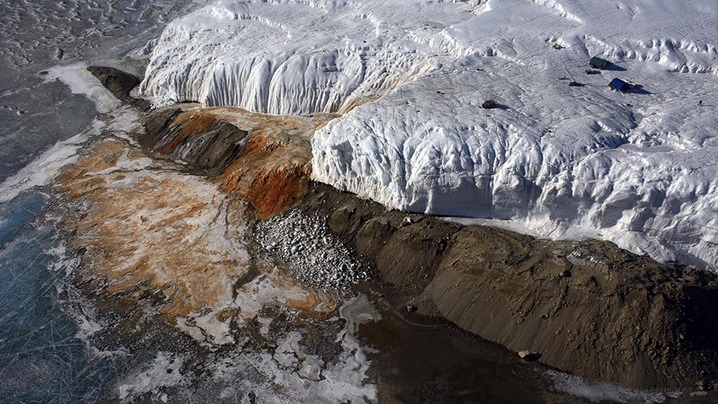
At the edge of Taylor Glacier, rusty-red liquid occasionally stains the ice. The color does not come from blood or red algae. Scientists have traced it to extremely salty, iron-rich water stored beneath the glacier. When that brine reaches oxygen at the surface, dissolved iron oxidizes and produces the red-orange color. The site also interests researchers because microorganisms persist in its cold, dark, salty environment.
Rocks on Racetrack Playa leave long tracks across a dry lakebed, sometimes changing direction. Direct observations finally documented the mechanism: after rare rain, a shallow pond freezes overnight. Sunlight breaks the thin ice into floating sheets, and light winds push those sheets against rocks. The stones slide slowly over softened mud. Visitors should never move rocks or walk on the playa when wet; footprints and tire marks can remain for years.
A breaking wave can flash electric blue when disturbed microorganisms emit light through a chemical reaction. Bioluminescence occurs in many marine organisms and can serve communication, defense, camouflage, or hunting. Coastal displays vary with species, water conditions, and season, so no beach can guarantee a show. Some blooms can also involve harmful algae, making local public-health guidance more reliable than social-media travel claims.
Auroras form when charged particles associated with the solar wind interact with Earth’s magnetic environment and upper atmosphere. Different gases and altitudes help produce different colors, most commonly green. Activity is strongest nearer the polar regions, but powerful geomagnetic storms can make auroras visible much farther away. Space-weather forecasts can improve the odds of seeing one, though clouds and artificial light still matter.
These smooth, lens-shaped clouds can resemble stacked saucers. They commonly form when stable, moist air flows over mountains, creating standing waves downwind. Air cools and condenses near a wave crest, then warms and evaporates as it descends. The cloud can appear stationary even while air moves rapidly through it. Pilots take the associated turbulence seriously, especially near mountainous terrain.
Places such as Giant’s Causeway display tightly packed stone columns, many with six sides. The pattern develops as thick lava cools, contracts, and fractures. Similar jointing appears in volcanic landscapes worldwide; the geometry reflects physical stress rather than deliberate construction. Local traditions give these formations cultural meaning, while geology explains how the rock acquired its shape.
Western Australia’s Wave Rock is a curved granite cliff on Hyden Rock. Weathering and water erosion undercut and rounded the face, while mineral deposits created vertical bands of color. Geoscience Australia reports that the underlying rock is more than 2.7 billion years old. Its surf-like profile is therefore a snapshot of extremely slow change, not a frozen ocean wave.
The most satisfying explanation is often not that nature performed a trick, but that ordinary processes aligned in an extraordinary way.
Sources: U.S. National Science Foundation; National Park Service; NOAA Ocean Exploration; Geoscience Australia.
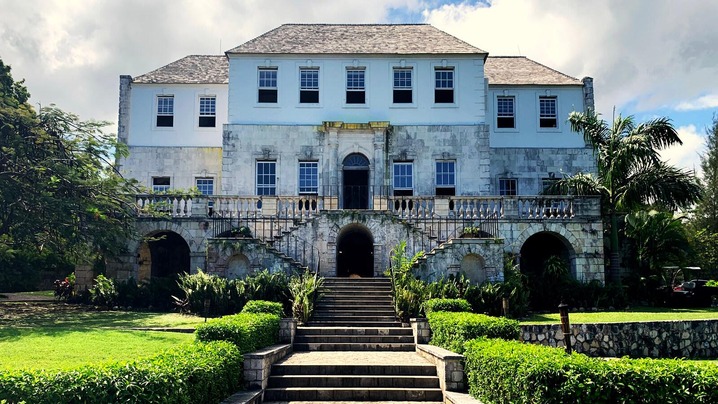
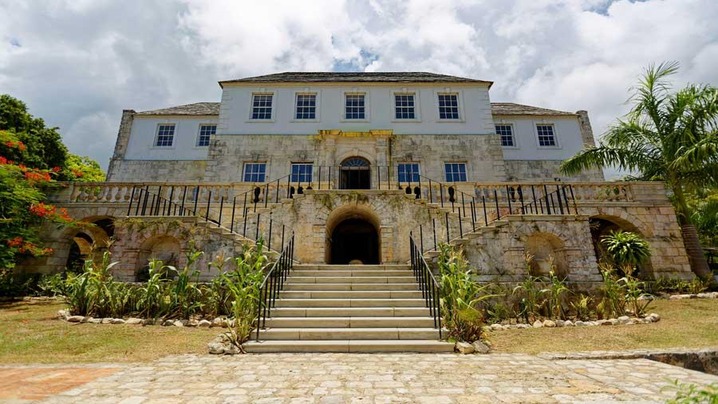
This house was built in 1770. In this house there lived a man John Palmer with his wife Annie Palmer. John married Annie but he was unaware of her past.
Maps of “mysterious triangles” promise a simple pattern: draw lines around several places, collect unsettling stories from inside them, and imply that the boundary explains what happened. The problem is that most such triangles have no official limits, no agreed dataset, and no demonstrated rate of incidents above comparable regions. They are better studied as folklore shaped by real hazards, selective reporting, and the human tendency to find patterns.
The best-known example is usually placed between Florida, Bermuda, and Puerto Rico, although published boundaries vary. NOAA notes that the name is not officially recognized by the U.S. Board on Geographic Names and that there is no evidence disappearances occur there more often than in other busy ocean regions. The area does contain genuine risks: hurricanes, rapidly changing weather, the powerful Gulf Stream, reefs, shallow water, heavy traffic, equipment failure, and human error.
Some famous cases remain unresolved because evidence was limited or never recovered. That is not evidence for an extraordinary cause. The U.S. Navy’s loss of Flight 19 in 1945, for example, generated an extensive record but also years of embellished retelling. Responsible accounts separate what contemporary reports establish from what later books added.
Popular writing has proposed a Pacific counterpart south of Japan, sometimes called the Dragon’s Triangle. Its boundaries shift even more than those of the Bermuda Triangle. The surrounding region is tectonically and volcanically active, and severe marine weather is possible. Those facts explain why ships require careful routing and monitoring; they do not establish a paranormal zone.
Undersea eruptions can damage vessels, create floating pumice, or temporarily change local conditions. Japan’s scientific agencies monitor volcanoes and earthquakes because these are measurable hazards. Grouping unrelated incidents inside a flexible triangle adds drama without improving the analysis.
This label is often drawn across a vast portion of Alaska and attached to reports of missing aircraft or people. Alaska truly presents difficult search-and-rescue conditions: immense distances, sparse roads, mountains, glaciers, cold water, sudden weather, limited communications, and large areas without witnesses. General statistics become misleading when the proposed “triangle” covers huge, differently used terrain.
Aircraft accidents should be evaluated through official investigation records, weather data, maintenance history, flight planning, and wreckage when available. Missing-person cases likewise require case-specific evidence. Combining both into one supernatural narrative erases important differences.
Writer Joseph A. Citro popularized this name for an area around Glastenbury Mountain in Vermont after several disappearances between 1945 and 1950. The stories are real missing-person cases, but the triangle is a retrospective literary frame rather than an official geographic or investigative category. Mountain weather, dense forest, difficult terrain, incomplete searches, and uncertain witness information are sufficient reasons for caution.
Another author-created label, the Bridgewater Triangle covers a broad section of southeastern Massachusetts and collects legends about unexplained animals, lights, apparitions, and archaeological sites. Treating Indigenous history as spooky scenery is especially misleading. Cultural places should be described through tribal and archaeological authorities, not folded into entertainment claims without evidence.
Mystery traditions can be culturally interesting without being scientifically persuasive. The strongest conclusion is often that hazardous environments deserve preparation—and that an attractive shape on a map is not a causal mechanism.
Sources: NOAA Ocean Service; Naval History and Heritage Command; U.S. Geological Survey Volcano Hazards Program; National Transportation Safety Board.
A building can be historically important and surrounded by sincere ghost stories without providing scientific proof of spirits. “Haunted” is a cultural label shaped by memory, grief, architecture, media, and tourism. The five sites below are worth examining because the documented history and the folklore have interacted—not because paranormal claims have been established as fact.
Sarah Winchester, widow of firearms heir William Wirt Winchester, bought a farmhouse in San Jose and expanded it for decades. The result includes unusual stairs, doors, rooms, and changes associated with continuous construction and earthquake damage. A popular story says a medium ordered her to build endlessly to appease people killed by Winchester rifles. The house’s own historical presentation now emphasizes her independence, losses, wealth, architecture, and the gap between evidence and legend.
Rose Hall is linked in tourism to the “White Witch,” Annie Palmer, who is said to have murdered husbands and abused enslaved people. The Jamaica National Heritage Trust identifies the building as a mid-nineteenth-century Georgian great house on a former sugar estate and notes the stories attached to Palmer. The legend should not eclipse the documented violence of plantation slavery. Accounts of a supernatural villain can individualize cruelty that was embedded in an economic and legal system.
The Myrtles is promoted through tales of apparitions, a haunted mirror, and a woman named Chloe. Researchers have questioned important details in those stories, including whether some alleged events occurred as retold. What is certain is that the property belongs to the history of slavery and plantation society. Visitors should distinguish archival history from narratives developed through oral tradition, books, tours, and television.
The Tower is a fortress complex, palace, prison, armory, and place of execution. Stories of Anne Boleyn and other famous figures returning as ghosts draw on real episodes of imprisonment and death, but repeated storytelling is not physical evidence. The site’s documented history—royal power, confinement, violence, and ceremony—is more extensive than its paranormal reputation.
Eastern State’s ruined cellblocks create a setting easily associated with fear. The prison introduced a system of isolation intended to encourage penitence, and its history raises serious questions about solitary confinement and punishment. Seasonal haunted attractions are a form of interpretation and entertainment, separate from the museum’s historical account. Visitors can acknowledge the atmosphere while focusing on the experiences of incarcerated people.
Several ordinary effects can reinforce a paranormal interpretation. Buildings settle and expand with temperature, producing knocks. Drafts move doors and curtains. Infrasound, poor lighting, expectation, fatigue, and suggestion can affect perception. Carbon monoxide can cause headache, confusion, and other symptoms and should be treated as a safety emergency, not a ghostly sign. None of these explanations proves what caused every reported experience, but they offer testable possibilities.
Folklore can reveal how communities process unsettling histories, and ghost tours can keep heritage sites financially viable. The responsible approach is neither ridicule nor credulity. It is to state what records support, label legends as legends, and treat the people connected to painful events with dignity.
Sources: Winchester Mystery House history; Jamaica National Heritage Trust; Historic Royal Palaces; Eastern State Penitentiary; National Park Service.
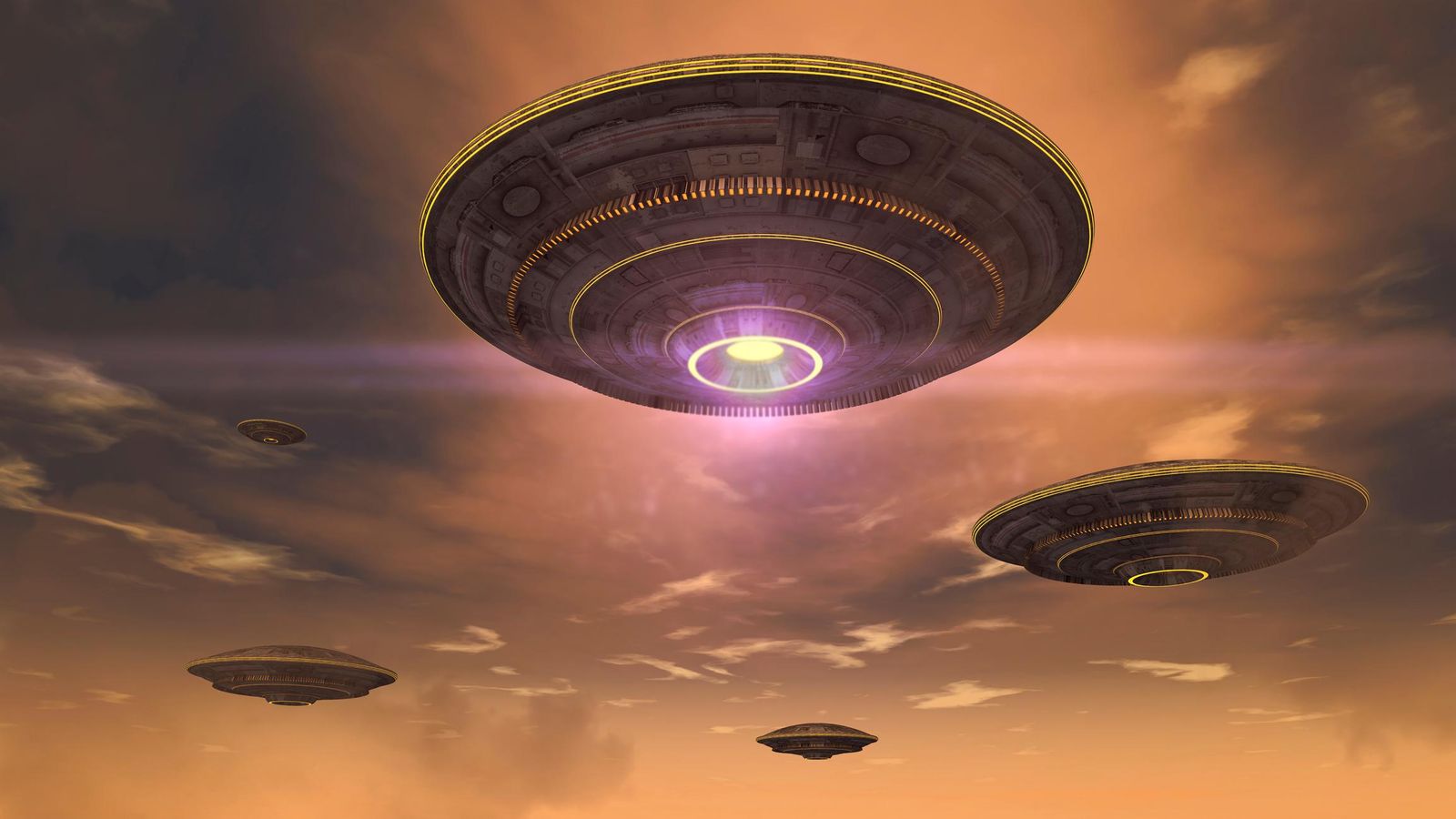
UFO, now often called unidentified anomalous phenomena or UAP, describes an observation that is not immediately identified. It is a status, not an explanation. Investigators compare witness accounts with radar, weather, astronomy, aircraft activity, balloons, drones, and sensor behavior. Some reports are resolved; others remain open because the data are too limited.
The U.S. All-domain Anomaly Resolution Office reports that many closed cases resolve to balloons, birds, drones, satellites, or aircraft. Its historical review found no verifiable evidence that a reported UAP represented extraterrestrial technology. It also notes a persistent problem: many reports lack enough high-quality data for firm conclusions.
That finding does not require dismissing witnesses. People can accurately report that they saw something unusual while being unable to determine its distance, size, or nature. Radar and cameras also produce artifacts. A strong case requires independent sensors, preserved metadata, known calibration, and a documented chain of custody.
Instead of asking which incident is “most mysterious,” ask what information would resolve it. Exact time, location, weather, original files, flight tracks, and sensor settings are more useful than dramatic adjectives. Remaining unidentified is a reason to gather better evidence—not to fill the gap with aliens, conspiracies, or ridicule.
Sources: AARO reporting trends; AARO historical report; Defense Department annual-report release; U.S. National Archives UAP records.
Top-Top Info Worldwide is a popular online newsportal and going source for technical and digital content for its influential audience around the globe.