






Top-Top Info Worldwide is a popular online newsportal and going source for technical and digital content for its influential audience around the globe.

Calling an ancient object or event “unexplained” can be misleading. Researchers often understand part of a puzzle while debating its maker, purpose, date, or cultural meaning. Good historical inquiry does not fill those gaps with certainty; it identifies what the surviving evidence can support. These 12 cases remain compelling precisely because each sits somewhere between a solid explanation and an open question.
Recovered from a Roman-era shipwreck, this geared bronze device modeled astronomical cycles and predicted eclipses. Imaging has revealed inscriptions and much of its gearing, but researchers still debate its complete display, workshop of origin, and whether comparable machines were common or exceptional.
Yale’s Beinecke Library dates the manuscript’s parchment to the early 15th century. Its illustrated pages use an undeciphered script or constructed writing system. Botanical, astronomical, and bathing imagery offer clues, yet no proposed reading has gained broad scholarly acceptance.
People in southern Peru created lines, geometric forms, and animal figures by moving dark surface stones. UNESCO describes the landscape as a record of ritual and social traditions spanning many centuries. How particular figures were used remains debated, but aliens are not needed to explain their construction.
Short sign sequences appear on seals and objects from the Indus civilization. Because inscriptions are brief and no bilingual text has been found, scholars cannot securely identify the underlying language or even determine how fully the signs represented speech.
Archaeology explains quarrying, transport, construction phases, burials, and solar alignments better than popular summaries suggest. The larger question is how these functions changed across generations and why communities invested so much labor in the site.
There was no single, simultaneous disappearance. Evidence points to different local combinations of drought, warfare, political fragmentation, and environmental pressure. Maya peoples and languages continued, so the mystery concerns transformations in particular urban systems, not a vanished civilization.
North America’s largest pre-Columbian city reached its height around the 11th and 12th centuries. Floods, resource stress, political change, migration, and disease have all been investigated, but no one-factor explanation accounts for its long decline.
Egyptian inscriptions describe groups involved in upheavals around the eastern Mediterranean near 1200 BCE. Their names are known, but their origins, alliances, and role in wider Bronze Age disruptions remain contested.
Materials science now explains important mechanisms, including reactions involving volcanic materials and lime. What remains under study is how varied recipes performed in different structures and environments—not whether Roman builders possessed practical expertise.
This fired-clay disc from Crete bears stamped symbols in a spiral. Its text is too short and too isolated for reliable decipherment. Without comparable inscriptions, confident translations are demonstrations of possibility rather than proof.
Thousands of large stone vessels in Laos form a prehistoric funerary landscape. Excavation links some locations with mortuary activity, while the exact sequence of rituals and the jars’ role within them remain active questions.
Archaeology, Inuit testimony, records, and the discoveries of HMS Erebus and HMS Terror have resolved much of the route. Researchers still reconstruct the crews’ final movements and the interacting effects of illness, nutrition, weather, and logistical failure.
Sources: National Archaeological Museum of Greece; Yale Beinecke Library; UNESCO: Lines and Geoglyphs of Nasca and Palpa; Parks Canada: Franklin wrecks.

There are many mysterious locations on our planet, shrouded in mystery and giving rise to many legends and speculations. Despite the development of science, which strives for a rational explanation of all phenomena, many of these places still do not lend themselves to scientific analysis and remain unsolved.
In the past, in an era of deep religiosity and ignorance, unusual phenomena were often attributed to intervention from above or the activities of dark forces. There were two main interpretations to choose from: either it was the action of supernatural forces, resulting in the appearance of sacred places and objects, or a short-term ‘settlement’ of evil spirits or even alien visits. Modern science advocates the idea that what is unknown today can be explained tomorrow when more data and knowledge is obtained.
Canadian Toronto resident Owen Ross claimed in 2020 that he was abducted by aliens and they showed him the future of Canada and the United States. The 38-year-old pediatric doctor suddenly disappeared in May of that year. Neither family, friends nor coworkers knew what happened to him or where he was for more than 3 days. The strangest part is that the disappearance happened right in the middle of a workday. Owen went into his office, took a few patients, and then literally vaporized. The only way out of the room - a window of the 4th floor, but the camera on the roof of the building opposite allowed to reliably find out that it was not used.

Lena is 8 years old, she started school last year and this summer she moved to the second grade. The girl is an excellent student, she has time to go to different classes, and at her age she already speaks English very well. Lena also writes stories, in which such thoughts that involuntarily comes to mind a comparison with children indigo, who were born in the late twentieth century and had amazing abilities. Lena also has them, but she only found out about it after the accidents that happened to her.
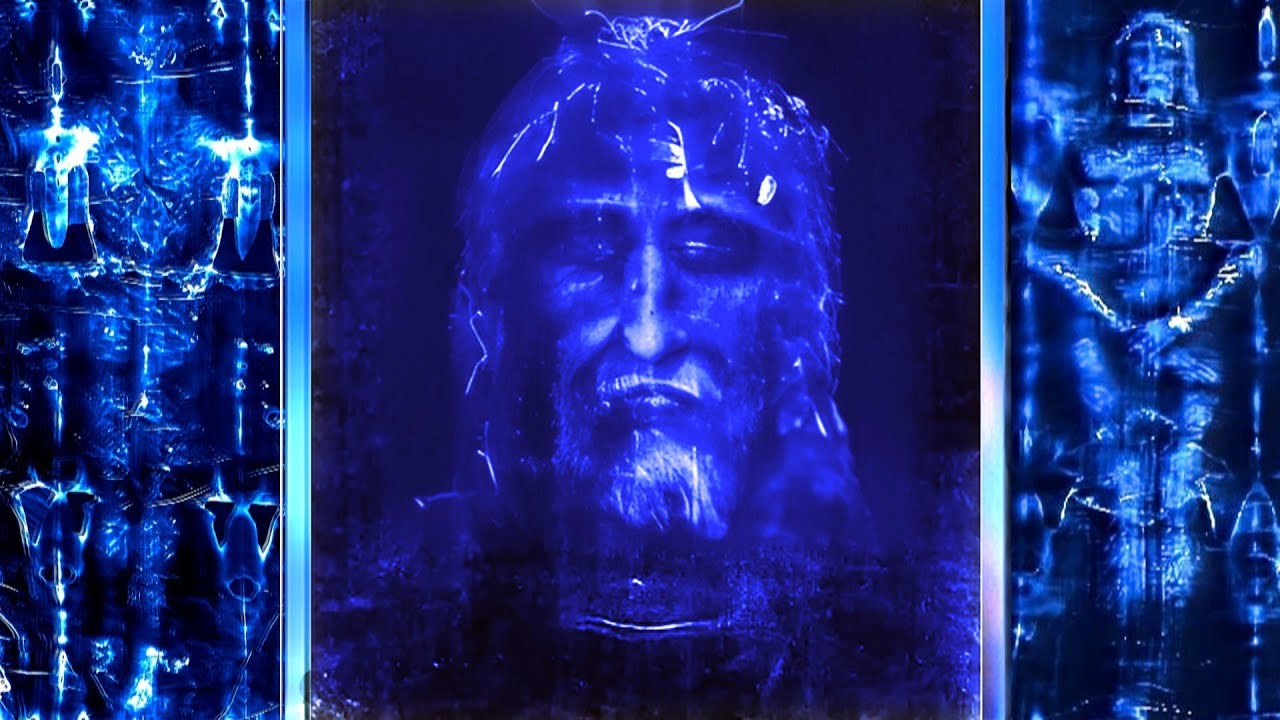
Italian scientists have conducted a new study of the Shroud of Turin - a famous relic revered by the Catholic and Orthodox Churches. This time was applied a modern method of analysis, which allows you to more accurately determine the age of the fabric. This writes the Daily Mail, calling the discovery “stunning”: the result brings experts closer to recognizing the authenticity of the Shroud, which has long remained a subject of scientific debate.
Top-Top Info Worldwide is a popular online newsportal and going source for technical and digital content for its influential audience around the globe.