







Top-Top Info Worldwide is a popular online newsportal and going source for technical and digital content for its influential audience around the globe.


The first know language ever was a proto-language on the African continent, and the first known proto-writing system was created in Nigeria.
Dogs have lived with many presidential families, but their historical importance is not measured by cuteness or popularity alone. They offer a view of private family life inside a public institution. They have also appeared in speeches, campaigns, photographs, films, books, and controversies, making them participants—usually unwitting ones—in presidential image-making.
The White House Historical Association reports that dogs have been the most common presidential pets. Records are uneven, especially for the nineteenth century, and not every animal associated with a president actually lived in the White House. The following examples are best read as windows into changing media and political culture rather than a ranked top nine.
President Warren G. Harding’s Airedale terrier, Laddie Boy, arrived as mass-circulation newspapers and news photography were transforming political coverage. The dog attended events, appeared in photographs, and became a recognizable public character. His fame showed that a presidential pet could generate a friendly stream of stories separate from policy.
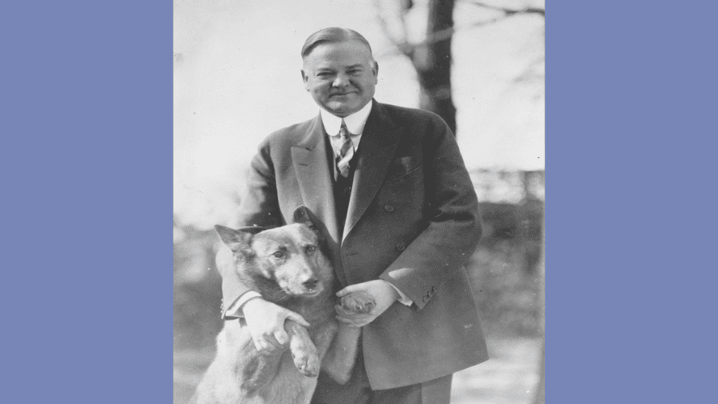
Herbert Hoover’s Belgian shepherd, King Tut, appeared with Hoover in a widely circulated image during the 1928 campaign. The photograph sought to soften a candidate perceived as reserved. The Hoover Presidential Library documents a much larger household of dogs, demonstrating how one memorable image can eclipse a more complicated pet history.
Franklin D. Roosevelt’s Scottish terrier Fala became one of the best-known presidential dogs. He traveled with Roosevelt, appeared in films and photographs, and received enormous public attention. In a 1944 campaign speech, Roosevelt mocked a Republican allegation involving the dog and government expense. The “Fala speech” showed how a pet could be used to deflect criticism and humanize a president during wartime.
Richard Nixon’s cocker spaniel Checkers is central to presidential-pet history even though the dog died before Nixon became president. In a nationally televised 1952 address defending his political finances, vice-presidential candidate Nixon said his family would keep the dog, a gift. The emotional appeal helped give the address its enduring nickname and demonstrated television’s growing power in politics.
Pushinka was given to the Kennedy family by Soviet leader Nikita Khrushchev. She was the offspring of Strelka, one of the Soviet dogs sent into space and returned alive. At the height of the Cold War, the small dog embodied an unusual thread of personal diplomacy and the space race. She later had puppies with the Kennedys’ dog Charlie.
Lyndon B. Johnson’s beagles, Him and Her, were frequently photographed. A 1964 image of Johnson lifting Him by the ears prompted criticism. Johnson said the dogs were accustomed to being handled that way, but the reaction illustrates changing expectations about animal welfare and the scrutiny attached to presidential behavior.
Gerald Ford’s golden retriever Liberty was a gift from presidential photographer David Hume Kennerly. Liberty gave birth to puppies at the White House, creating popular family stories during a presidency shaped by the aftermath of Watergate. Images with the dog helped present the residence as a lived-in home, although historians should still distinguish candid family life from deliberate public communication.
George H. W. Bush’s English springer spaniel Millie appeared in Millie’s Book, written in the dog’s voice with First Lady Barbara Bush. Proceeds benefited literacy efforts. Millie’s puppies included Spot, who later returned to the White House with President George W. Bush—an unusual canine link between two administrations.
The Obama family’s Portuguese water dogs, Bo and Sunny, appeared in official photographs, videos, holiday events, and social media. Their visibility reflected a new communications environment in which the White House could publish pet content directly rather than relying entirely on newspapers or broadcasters.
Pets can make leaders seem approachable, provide companionship under intense pressure, and give children a connection to ordinary family routines. Their public stories can also be carefully curated. A cheerful photograph reveals something real, but it does not offer a neutral measure of character or policy.
Presidential dogs are most interesting when placed in context: Laddie Boy with the rise of mass media, Fala and Checkers with political speech, Pushinka with Cold War diplomacy, and Bo and Sunny with digital communication. Seen this way, they are not contestants in a popularity ranking. They are small but revealing parts of how Americans imagine the presidency.
Sources: White House Historical Association: First Family Life; White House Historical Association: Top Dogs; John F. Kennedy Library: Pushinka; Franklin D. Roosevelt Library: Fala; Herbert Hoover Library: First Family Pets.
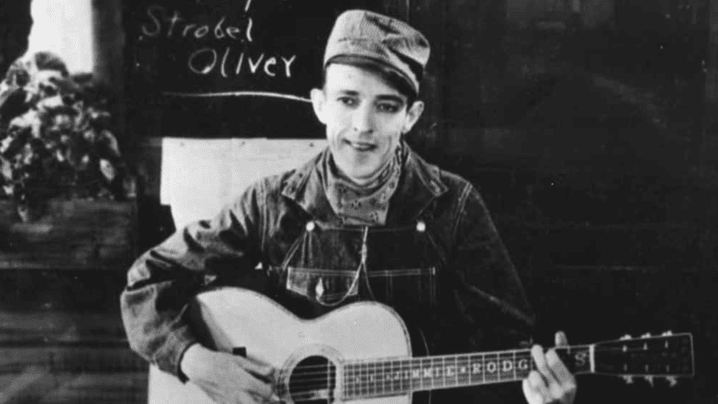
“The Father of Country Music,” Jimmie Rodgers got his big break in 1927 when he and his band were discovered at the famous Bristol Sessions held by the Victor Talking Machine Company and won the opportunity to record an album with the company.

There is no final list of the best horror movies. Fear is personal, and the genre includes silent expressionism, supernatural drama, psychological suspense, body horror, satire, and social allegory. These ten films are presented chronologically rather than ranked. Each introduced or refined a cinematic idea that later filmmakers could not ignore.
F. W. Murnau turned architecture, shadow, and unnatural movement into a vocabulary for screen terror. Its unauthorized adaptation of Dracula also became a landmark in the history of film preservation: surviving prints kept the work alive after a legal effort to destroy it.
James Whale’s film transformed Mary Shelley’s creation into a defining Hollywood image. Its production design, performance, and mixture of sympathy and dread established the monster as both threat and tragic outsider.
Producer Val Lewton and director Jacques Tourneur showed how suggestion could substitute for spectacle. Off-screen space, uncertain psychology, and carefully timed sound made viewers imagine what the camera withheld.
Alfred Hitchcock disrupted audience expectations by shifting identification and structure midstream. Rapid editing, stark music, and an ordinary roadside setting helped move mainstream horror away from distant castles and toward intimate psychological unease. The BFI’s Sight and Sound poll recognizes it as a major work of cinema, not only genre history.
George A. Romero’s independent film converted the walking dead into a modern social nightmare. Its confined setting, documentary-like texture, bleak ending, and Black lead invited interpretations about race, authority, media, and social breakdown. The Library of Congress preserves it in the National Film Registry.
William Friedkin brought documentary intensity and theological seriousness to a studio production about possession. Its sound design, performances, and willingness to treat doubt as dramatically important gave supernatural horror unusual emotional weight.
Tobe Hooper created an impression of relentless brutality with less explicit imagery than its reputation suggests. Harsh sound, heat, grainy photography, and industrial decay made atmosphere itself feel dangerous.
Ridley Scott fused haunted-house structure with science fiction. The working crew, used-looking spacecraft, biomechanical production design, and threat of bodily invasion reshaped both genres and expanded what a studio creature feature could express.
Hideo Nakata connected a traditional ghost story to modern media technology. Its cursed videotape made transmission itself frightening and helped open a major international audience for Japanese horror, influencing remakes and digital-age supernatural stories.
Jordan Peele used suspense, satire, and body horror to examine racism hidden beneath polite liberal behavior. The film’s cultural reach demonstrated that a sharply specific social premise could also become widely accessible popular horror.
Choose a criterion: historical influence, formal invention, emotional effect, regional importance, or personal rewatch value. Then look beyond English-language theatrical releases. Horror grows through national traditions, low-budget experimentation, folklore, television, and stories by filmmakers whose perspectives were long excluded. A useful canon is not a sealed vault; it is a map that encourages further viewing.
Other equally defensible lists would include folk horror, queer horror, animation, television, or more films from Africa, Latin America, and Southeast Asia.
Sources: BFI Sight and Sound poll; Library of Congress National Film Registry; Library of Congress essay on Night of the Living Dead; MoMA Cinema Dracula program; Academy: Kwaidan and horror history.
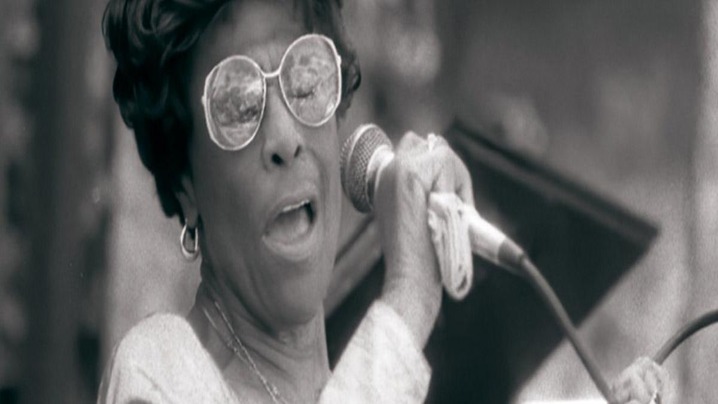
Jazz singing resists a simple greatest-of-all-time scoreboard. Record sales, vocal range and awards measure different things, while the music itself depends on interpretation: how a singer reshapes melody, places a syllable against the beat, responds to an ensemble and makes an old standard feel newly personal. The ten artists below are therefore not ranked. Together they offer a useful route through several traditions, from blues-inflected storytelling to scat improvisation, cool restraint and modern genre-crossing.
Choose one song recorded by several singers and compare versions. Notice where each vocalist breathes, whether the melody is preserved or rewritten, and how the band answers. Then hear the same artist in two periods: an early small-group session and a later concert can reveal changing tempo, range and priorities. Live recordings are particularly helpful because jazz is collaborative and spontaneous.
No ten-person selection can represent the whole field. Important paths continue through Ethel Waters, Abbey Lincoln, Shirley Horn, Jon Hendricks, Sheila Jordan, Mark Murphy, Cassandra Wilson, Dianne Reeves, Kurt Elling, Cécile McLorin Salvant and many others. Treat this list as a map legend, not a border. The best next singer is the one whose choices make you curious about the song, the band and the tradition behind them.
Sources: Library of Congress: Ella Fitzgerald Collection; Library of Congress: Billie Holiday; Library of Congress: Jazz Singers exhibition; Smithsonian Folkways: Jazz anthology.
Top-Top Info Worldwide is a popular online newsportal and going source for technical and digital content for its influential audience around the globe.