








Top-Top Info Worldwide is a popular online newsportal and going source for technical and digital content for its influential audience around the globe.

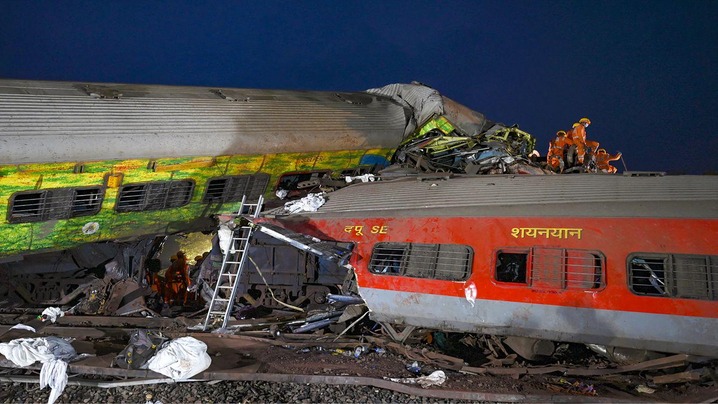
The Queen of The Sea train crash in Sri Lanka, triggered by the devastating Indian Ocean Tsunami in December 2004, holds the grim distinction of being the deadliest train disaster in recorded history. This catastrophic event resulted in the tragic loss of over 1,700 lives.
Calling an emergency landing “great” can obscure the fear, injuries, and technical failures involved. A better way to study these events is to ask what helped people survive and what investigators changed afterward. The five cases below are notable not as spectacles, but as evidence of how preparation, judgment, engineering, and independent investigation work together.
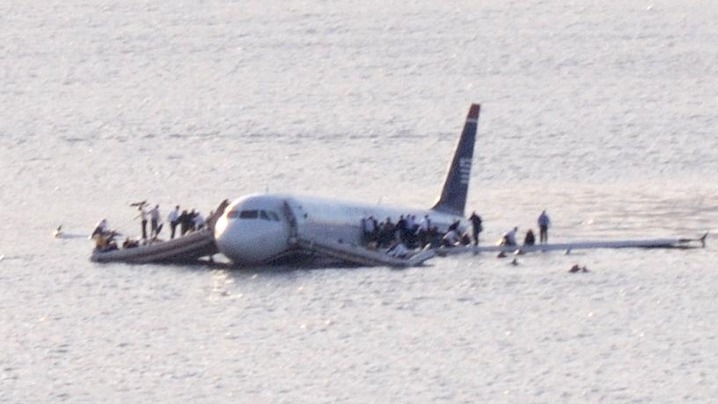
On January 15, 2009, US Airways Flight 1549 lost almost all thrust in both engines after striking large birds shortly after leaving New York’s LaGuardia Airport. The Airbus A320 landed on the Hudson River, and all 155 people aboard evacuated. The National Transportation Safety Board did not reduce the outcome to pilot skill alone. Its investigation examined bird-ingestion standards, checklist design, ditching certification, crew training, cabin preparation, and wildlife-hazard management. The lesson is systemic: a successful response depends on many layers that already exist before a crew faces an emergency.
In January 2008, British Airways Flight 38 lost thrust from both engines during final approach to London Heathrow. The Boeing 777 came down short of the runway, yet everyone survived. The UK Air Accidents Investigation Branch traced the event to restricted fuel flow caused by ice within the fuel system under a rare combination of conditions. The inquiry produced safety recommendations and design changes. This case shows why investigators preserve data, reproduce conditions, and resist quick assumptions: the underlying mechanism was neither obvious nor a familiar engine failure.
Qantas Flight 32 suffered an uncontained engine failure after departing Singapore in November 2010. Debris damaged multiple aircraft systems, creating a long sequence of warnings and abnormal conditions. The crew returned the Airbus A380 to Singapore with all 469 occupants aboard. Australia’s investigation focused on the manufacturing defect, the propagation of damage, aircraft-system behavior, and the extraordinary workload imposed on the flight crew. The event became a case study in crew resource management: distributing tasks, verifying information, and preserving time can matter as much as manipulating the controls.
In August 2001, Air Transat Flight 236 developed a fuel leak while crossing the Atlantic and eventually lost power from both engines. The Airbus A330 glided to Lajes Airport in the Azores. All 306 occupants survived, although some were injured during the evacuation. Canada’s Transportation Safety Board identified maintenance and operational factors, including the installation of an incorrect hydraulic component and the crew’s interpretation of unusual fuel indications. Resulting actions addressed maintenance information, fuel-leak procedures, and training. The larger lesson is that an emergency may begin with confusing data rather than a dramatic warning.
Air France Flight 358 overran a wet runway at Toronto in August 2005 during a thunderstorm, entered a ravine, and caught fire. All 309 people escaped. The investigation examined approach decisions, touchdown point, reverse-thrust timing, weather information, runway design, and evacuation. Survival did not erase the seriousness of the accident; instead, it highlighted how cabin crews, exits, nearby emergency response, and passenger behavior influence outcomes after impact.
Sources: NTSB: US Airways Flight 1549; UK AAIB: British Airways Flight 38; ATSB: Qantas Flight 32; TSB Canada: Air Transat Flight 236; BEA/TSB: Air France Flight 358.

By far the most deadly type of car accident is when a vehicle veers off the roadway and crashes into another object, such as a telephone pole or a concrete pylon.
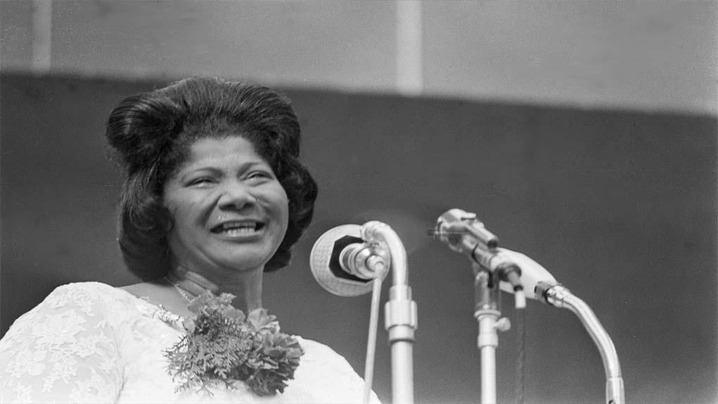
No list can rank gospel singers by spiritual meaning or vocal greatness. Gospel is a living religious tradition, not merely a commercial genre, and its history includes congregations, composers, quartets, choirs, instrumentalists, and independent labels. These seven singers offer an entry point into that larger story because each changed how gospel was performed, recorded, taught, or heard beyond the church.
Smith helped establish the expressive solo tradition associated with modern Black gospel. Her performances combined singing with spoken “sermonettes,” creating a model in which testimony, phrasing, and direct communication mattered as much as range. She also mentored younger artists. The National Endowment for the Arts recognized her as a National Heritage Fellow in 1988, acknowledging both artistry and the transmission of tradition.
Jackson brought gospel to audiences around the world without abandoning its sacred center. After moving from New Orleans to Chicago, she worked within the city’s growing gospel community and became closely associated with composer Thomas A. Dorsey. Her recordings, radio and television appearances, international tours, and participation in the civil rights movement made her voice part of public life. Her success demonstrated that gospel could reach a mass audience on its own terms.
Tharpe joined commanding vocals with amplified guitar at a time when few women were presented as instrumental stars. Her rhythmic attack and stage presence connected sanctified church music with the developing sounds of rhythm and blues and rock and roll. Her career also reveals the porous boundary between sacred and secular markets: audiences and institutions often imposed a division that musicians themselves crossed creatively.
With the Famous Ward Singers, Ward helped reshape the gospel ensemble as a polished touring act. The group’s arrangements, visual presentation, and emotional performances influenced later gospel performers and popular singers. Their success also illustrates the importance of women-led groups in building the postwar gospel circuit.
Walker founded the Caravans in Chicago and created a crucial platform for future soloists, including Shirley Caesar, Inez Andrews, and Dorothy Norwood. Her legacy is therefore both musical and institutional. She recorded extensively, but her ability to assemble, mentor, and spotlight other voices may be her greatest contribution.
Caesar began performing as a child and later joined the Caravans before developing a long solo career. Her recordings preserve gospel’s connection to preaching, storytelling, and community experience. The NEA named her a National Heritage Fellow in 1999, emphasizing a career rooted in church practice as well as professional performance.
Crouch’s songwriting, choir arrangements, and accessible contemporary sound expanded gospel’s reach in the late twentieth century. His work traveled through churches, recordings, film, and collaborations with popular artists. He represents the genre’s continuing evolution: new instruments and production styles can enter gospel while its message and communal function remain central.
Listen for more than vocal power. Notice call and response, improvisation, sermon-like pacing, rhythmic accompaniment, and the relationship between soloist and ensemble. Follow the institutions behind the sound—churches, conventions, touring networks, labels, and community radio. Gospel history is a web of influence, and these seven voices are illuminating points within it, not a final hierarchy.
Sources: Library of Congress: African American Gospel; Smithsonian: Mahalia Jackson; NEA: Willie Mae Ford Smith; NEA: Albertina Walker; NEA: Shirley Caesar.
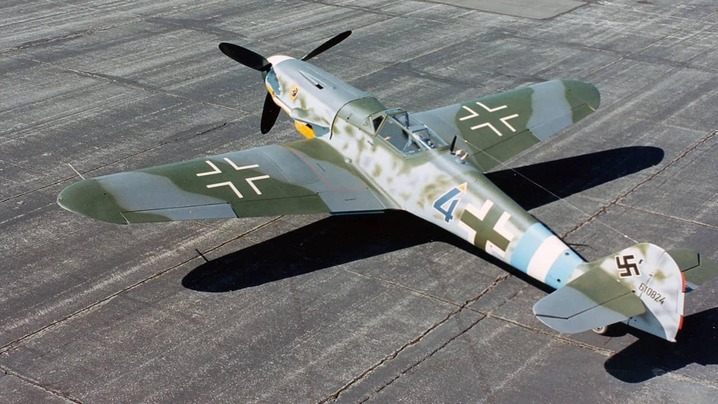
There was no single “best” German fighter of World War II. Aircraft were designed for different missions, entered service at different stages of the conflict, and operated under changing conditions. Speed, climb, range, armament, reliability, production volume, pilot training, fuel supply, and tactical situation all affected combat value. The most useful approach is to examine representative designs and ask what problem each was meant to solve.
The Bf 109 was the Luftwaffe’s principal single-engine fighter and one of the war’s most-produced combat aircraft. Early versions fought in Spain before serving from the invasion of Poland through Germany’s defeat. Its compact airframe could be repeatedly upgraded with stronger engines and weapons. That adaptability was a major strength, although later models became demanding to handle and the narrow-track landing gear contributed to ground accidents.
Introduced operationally in 1941, the radial-engine Fw 190 initially surprised Allied pilots with its performance. It complemented rather than simply replaced the Bf 109. The design offered heavy armament, good roll performance, and a rugged structure, and it evolved into fighter, ground-attack, and bomber-interceptor variants. Later long-nosed versions used liquid-cooled engines to improve high-altitude performance.
The twin-engine Bf 110 was conceived as a long-range heavy fighter. It performed effectively in some early campaigns but proved vulnerable when forced into close combat with agile single-engine opponents during the Battle of Britain. The airframe found a more suitable role as a night fighter, where range, radar, multiple crew members, and heavy weapons mattered more than turning ability.
The Me 262 was the only jet fighter to conduct air-to-air combat in World War II. Its speed created a serious tactical challenge for Allied fighters, especially once airborne. Yet it entered combat in small numbers in 1944, suffered from immature engines and production disruption, and depended on scarce fuel and trained pilots. Allied forces learned to attack jets near their airfields, particularly during takeoff and landing.
The rocket-powered Me 163 was an extraordinary interceptor with exceptional speed and climb. It was also impractical. Its propellants were hazardous, powered flight lasted only minutes, and the aircraft had limited opportunity to attack before gliding home. The RAF Museum describes it as the only rocket interceptor used operationally; its technical novelty did not translate into strategic effect.
Designed for night fighting, the He 219 combined radar, heavy armament, high performance, and an early operational use of ejection seats. It demonstrated what a purpose-built night fighter could offer, but production remained limited. Organizational conflict, shifting requirements, and wartime shortages prevented it from becoming a decisive system.
The Ta 152 was a late-war development of the Fw 190 family optimized in some versions for high-altitude interception. Its long wings and powerful engine addressed the growing need to combat high-flying Allied aircraft. Only a small number reached units, making its operational record too limited for sweeping claims about superiority.
The He 162 was a compact jet fighter developed under emergency conditions. It used non-strategic materials, including wood, and was intended for rapid production. Its rushed design and training concept created severe risks, while too few aircraft became operational to alter the war. It is best understood as evidence of Germany’s deteriorating strategic position, not as a missed wonder weapon.
These aircraft reveal genuine advances in aerodynamics, propulsion, radar integration, and weapons. They also show that technology cannot be separated from manufacturing quality, maintenance, logistics, pilot preparation, and ethics. Some production relied on forced labor under brutal conditions. A historically responsible account recognizes engineering achievements without turning weapons or the regime that fielded them into objects of admiration.
Sources: Smithsonian National Air and Space Museum: Fw 190; RAF Museum: Me 262; RAF Museum: Me 163; National Museum of the U.S. Air Force: Bf 109.
Top-Top Info Worldwide is a popular online newsportal and going source for technical and digital content for its influential audience around the globe.