








Top-Top Info Worldwide is a popular online newsportal and going source for technical and digital content for its influential audience around the globe.


As of September 2022, Jerry Seinfeld, an American actor, stand-up comedian, writer, and producer is the No 1 Richest Actor in the World with the net worth of US $ 1 Billion.

There is no objective formula for the greatest golfer ever. Major championships matter, but their number, status, fields, travel demands, and eligibility changed over time. Tour victories favor players with long access to a particular circuit, while fame can reflect television coverage and sponsorship as much as performance. This list identifies ten golfers with exceptional records and lasting influence; it is a framework for comparison, not a final ranking.
Nicklaus set the benchmark in men’s major championships with 18 victories and also accumulated an extraordinary number of runner-up and top finishes. His record across decades, courses, and all four modern men’s majors makes longevity central to his case. He later influenced tournament design and administration as well.
Woods combined 15 men’s major titles with 82 recognized PGA Tour wins, tying Sam Snead’s tour record. At his peak, his driving, iron play, recovery skills, and putting changed competitive expectations. His success also expanded golf’s audience and commercial reach, although access to the sport remains unequal.
Whitworth’s 88 official LPGA victories remain the highest total on that tour. She won over a long period and paired scoring consistency with repeated money-list success. The absence of a U.S. Women’s Open title is sometimes used against her, but reducing a career to one missing trophy undervalues sustained excellence.
Wright won 82 LPGA events and 13 major championships. Her 13 victories in the 1963 season remain an LPGA record. Players and instructors have long studied the efficiency of her swing, making technical influence part of her legacy alongside the numbers.
Sörenstam earned 72 LPGA victories and ten major titles while setting scoring standards that defined her era. In 2001 she became the first woman to shoot 59 in an official LPGA round. Her appearance in a PGA Tour event at Colonial in 2003 also provoked a worldwide conversation about competition and gender in golf.
Hogan’s nine major victories and celebrated ball-striking are only part of his story. After a devastating 1949 automobile collision, he returned to championship golf and won three majors in 1953. His practice methods and writing strongly influenced later approaches to swing mechanics, even when modern teachers dispute rigid imitation.
South African Gary Player won nine men’s majors and completed the career Grand Slam. Extensive international travel distinguished a career built before today’s interconnected schedule. His global record broadens comparison beyond PGA Tour totals, though any account of South African sport in his era also belongs within the history of apartheid.
Berg was a founding member of the LPGA and won 15 championships now recognized as women’s majors, the tour’s career record. Because the women’s major calendar changed substantially, her achievements require historical context rather than direct arithmetic against modern players.
Snead shares the PGA Tour’s recognized career-wins record at 82 and remained competitive for an unusually long time. His fluid action became iconic. He never won the U.S. Open, a reminder that even the strongest careers contain gaps and that one championship should not define an entire record.
Jones dominated elite amateur and open competition in the 1920s and retired from major competition at 28 after winning the four leading championships then available to him in 1930. His era excluded many people through race, class, and amateur-status barriers. His importance includes co-founding Augusta National and the Masters, institutions whose histories also warrant critical examination.
Golf history becomes richer when comparison preserves context. The best question is not only who won most, but how a player changed what excellence looked like.
Sources: PGA Tour: Major Wins; PGA Tour: Career Wins; LPGA All-Time Records; World Golf Hall of Fame.
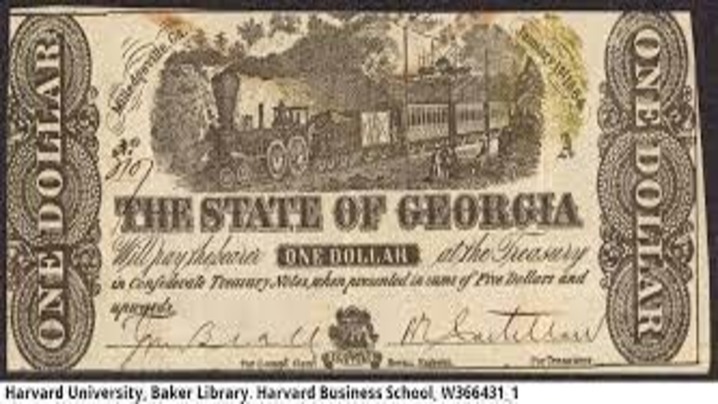
Even though a lot of residents of Georgia wouldn’t mind getting a new regional currency anytime soon, it seems rather unlikely the Georgia Confederate Dollar will see a successor in the near future.
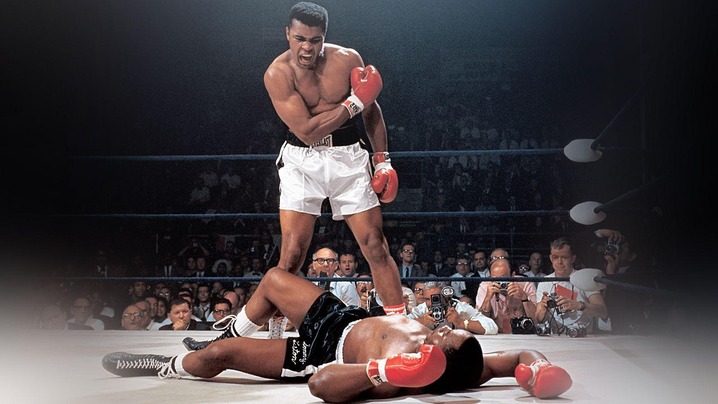
No formula can identify the best boxer across every era and weight class. Rules changed, championship structures multiplied, careers were disrupted by war or discrimination, and footage is scarce for early fighters. Heavyweights receive disproportionate attention even though pound-for-pound judgment is meant to compare skill across sizes. These seven boxers offer different reasons a career can matter; their order is chronological, not a ranking.
Johnson became the first Black world heavyweight champion in 1908. His success confronted a segregated boxing culture whose promoters and writers openly sought a white challenger to defeat him. Authorities later prosecuted Johnson under the Mann Act in a racially charged case; he received a posthumous presidential pardon in 2018. His defensive skill and composure matter, but his larger legacy is inseparable from the freedom he asserted in public life.
Joe Louis held the heavyweight championship from 1937 to 1949 and made 25 successful title defenses, a benchmark that still defines long championship reigns. His 1938 rematch victory over Max Schmeling acquired international symbolism as Nazi Germany used sport for propaganda, although Louis himself lived within American segregation. His economical combinations and consistency made dominance look methodical rather than theatrical.
Robinson’s movement, combinations, adaptability, and long success at welterweight and middleweight made him the usual reference point for pound-for-pound discussion. His record also reflects an earlier boxing economy in which elite fighters competed far more frequently than modern champions. Comparing raw totals without that context is misleading. Robinson’s importance lies in the technical completeness observers saw across offense, defense, and transitions.
Ali won Olympic gold in 1960 and later became a three-time heavyweight champion. In the ring, his speed, distance control, psychological tactics, and ability to adapt produced defining contests with Sonny Liston, Joe Frazier, and George Foreman. Outside it, his refusal of military induction during the Vietnam War cost him years of his prime before the Supreme Court overturned his conviction. His cultural impact extends well beyond a win-loss record.
Durán built his strongest claim to greatness at lightweight, where his aggressive style was supported by sophisticated defense, positioning, and body punching. He later defeated Sugar Ray Leonard at welterweight and won titles in additional divisions. His career’s uneven late chapters are part of the record, but they do not erase how effectively he combined pressure with technical control.
Pacquiao won recognized world titles across an unprecedented range of weight divisions, rising from flyweight to compete against elite welterweights. His explosive entries, angles, and high punch output were central to his success. Multiple sanctioning bodies and different definitions of a “world title” complicate numerical claims, but the scale of his movement through weight classes remains exceptional.
Shields won Olympic gold medals in 2012 and 2016, becoming the first U.S. boxer to win consecutive Olympic golds. As a professional she became an undisputed champion in multiple divisions during the four-belt era. Her career belongs in historical discussion not as a token addition but because it combines elite amateur achievement with rapid professional unification at a time when women’s boxing has gained wider institutional support.
A thoughtful comparison weighs quality of opposition, dominance within a natural weight class, longevity, technique, and the conditions a boxer had to overcome. It also recognizes boxing’s health costs. Greatness is an argument supported by evidence, not a title that statistics can settle automatically.
Sources: National Park Service on Jack Johnson; Encyclopaedia Britannica on Joe Louis; Encyclopaedia Britannica on Sugar Ray Robinson; Encyclopaedia Britannica on Muhammad Ali; Olympics profile of Claressa Shields.
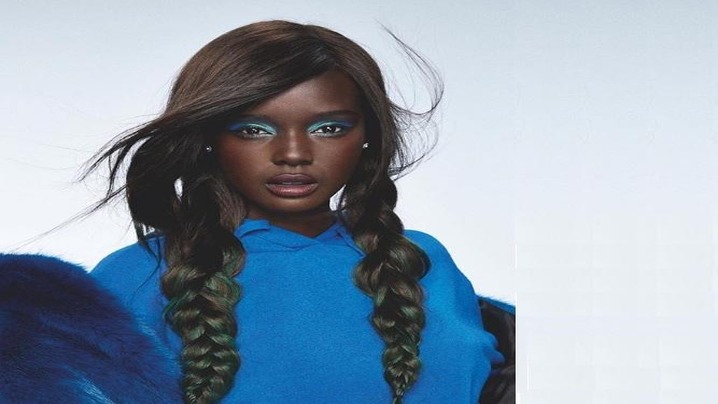
There is no objective way to identify the world’s “most attractive” women. Attraction varies among people and across cultures, while public images are shaped by styling, photography, editing, access, and marketing. Turning women into a numbered list can also imply that appearance is their main source of value. A more useful discussion asks how ideas of beauty are created and why some public figures become influential.
Preferences are influenced by family, community, history, fashion, and media. They also change over time. Features treated as desirable in one place or era may be ignored or stigmatized in another. Global entertainment can spread a narrow ideal widely, but audiences continue to interpret beauty through local traditions and personal experience.
That variability is important because rankings usually conceal the judge. A magazine editor, a fan poll, an algorithm, and an advertising campaign do not measure the same thing. Even a large vote shows the preferences of its participants, not a scientific fact about everyone on Earth.
Public recognition depends on opportunity. Film distribution, fashion casting, language, wealth, disability access, colorism, age bias, and platform algorithms all affect who is seen. UNESCO has documented persistent gender stereotyping and underrepresentation in media. When the same narrow range of faces and bodies receives the most exposure, familiarity can be mistaken for universality.
Digital platforms intensify the effect. Filters and retouching can create appearances that no person maintains in ordinary life. Research summarized by the American Psychological Association links objectifying or highly appearance-focused media with body dissatisfaction and self-objectification, especially among young people. That does not make fashion, makeup, or visual style inherently harmful. It means viewers benefit from recognizing the commercial and technical systems behind an image.
Appearance may contribute to celebrity, but enduring influence is usually multidimensional. Audiences respond to artistic skill, humor, confidence, activism, originality, professionalism, and the ability to represent experiences that were previously excluded. A model who expands representation, an actor who changes the roles available to others, or an athlete who uses visibility to improve her sport has a legacy that cannot be reduced to facial symmetry or clothing.
A thoughtful profile should therefore explain what a person has made, changed, or contributed. It should use the person’s chosen name, avoid speculation about cosmetic procedures or private relationships, and distinguish verified achievements from promotional claims.
It is possible to celebrate glamour without pretending that human worth can be scored. Style can be creative; beauty can be joyful; attraction can be personal. The problem begins when a subjective preference is presented as a global hierarchy or when public women are discussed as objects rather than people.
A richer article might feature influential women in fashion and culture while explaining why each matters: a distinctive creative direction, a barrier broken, a business built, or a community represented. That preserves the reader’s interest in charisma and visual culture while replacing a reductive contest with context.
Sources: UNESCO on gender and media stereotyping; APA on the sexualization of girls; APA on body-positive media; APA research on body-positive content.
Top-Top Info Worldwide is a popular online newsportal and going source for technical and digital content for its influential audience around the globe.